Hebrew Baby Names: 50 Timeless Picks and Their Meanings
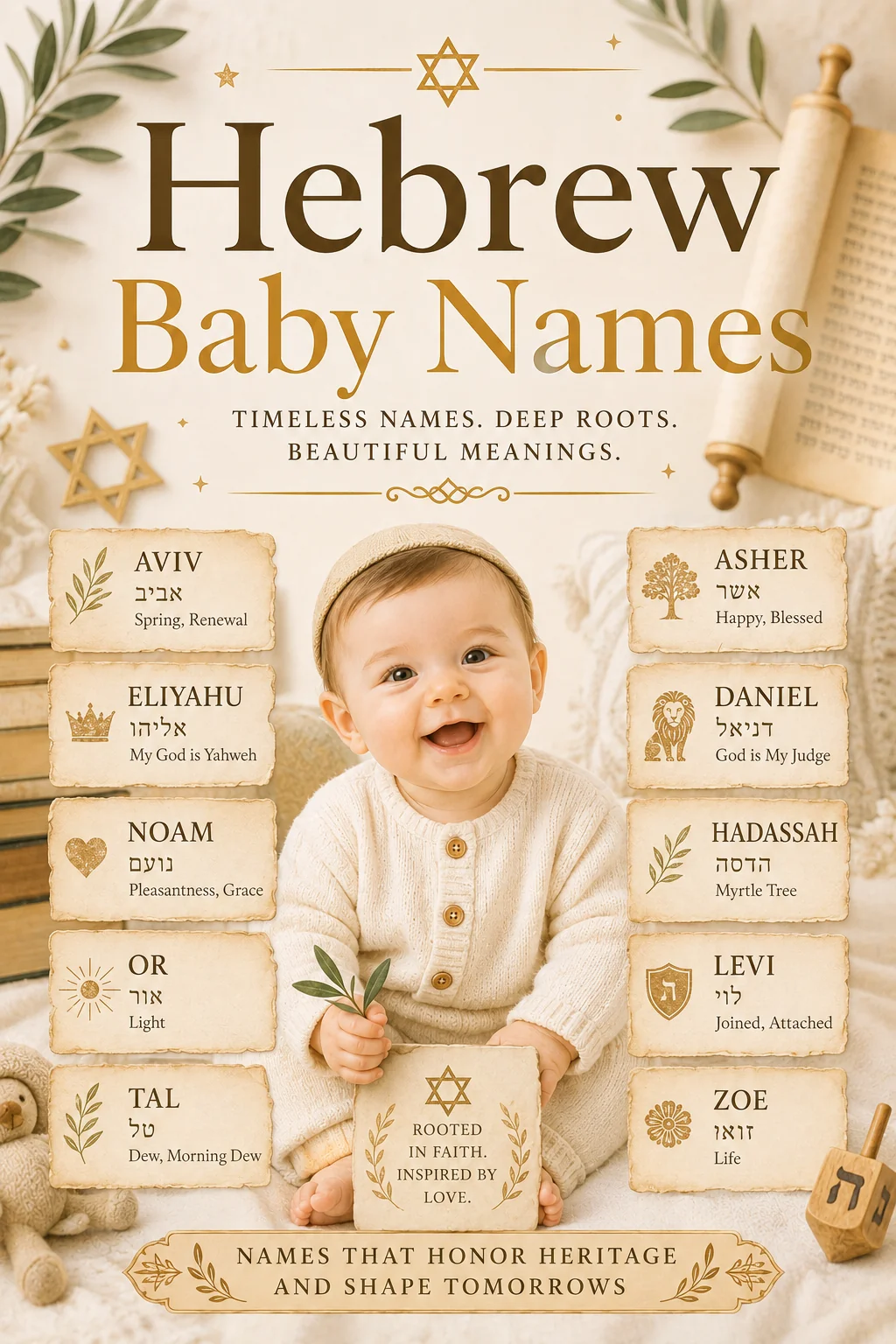
If you've spent any time at all on baby name lists, you've already met dozens of Hebrew names without realizing it. David, Sarah, Noah, Hannah, Benjamin, Leah — names so woven into everyday life across the world that we forget they all trace back to the same ancient language. That's the remarkable thing about Hebrew names: they've traveled further and lasted longer than almost any other naming tradition on earth, carried across continents and centuries by faith, migration, and sheer staying power.
What I love about this category is its range. You've got the rock-solid biblical classics that never date. You've got the warm, modern Israeli names — Noa, Ari, Lior — that feel fresh and current. And you've got rarer gems that most parents never stumble across. I've gathered the best of all three here, with meanings, nickname options, and honest notes on which feel timeless versus trendy. Whether you're drawn to the faith, the heritage, or simply names that have proven they can last, let's dig in.
👧 Hebrew girl names
| Name | Meaning |
|---|---|
| Hannah | Grace, favor |
| Sarah | Princess, noblewoman |
| Leah | Weary; delicate |
| Naomi | Pleasantness, sweetness |
| Abigail | My father's joy |
| Talia | Dew of God; gentle rain |
| Noa | Movement, motion |
| Eliana | God has answered me |
| Maya | Water; from God |
| Tamar | Date palm tree |
| Liora | My light |
| Shira | Song, poetry |
| Dalia | Branch; flower |
| Yael | Mountain goat; to ascend |
| Adina | Gentle, delicate |
👦 Hebrew boy names
| Name | Meaning |
|---|---|
| Noah | Rest, comfort |
| Ezra | Helper |
| Asher | Happy, blessed |
| Eli | Ascended, my God |
| Levi | Joined, attached |
| Gabriel | God is my strength |
| Ari | Lion |
| Caleb | Devotion; whole-hearted |
| Lior | My light |
| Jonah | Dove |
| Micah | Who is like God? |
| Boaz | Swiftness; strength |
| Reuben | Behold, a son |
| Eitan / Ethan | Strong, firm, enduring |
| Tobias | God is good |
The biblical heavyweights (and why they never die)
Some Hebrew names have been in continuous use for three thousand years. Let that sink in — a parent today naming their son David is reaching for the same name as a shepherd-king in the Iron Age. A handful of these classics are worth knowing for their sheer staying power:
- David (beloved) — the warrior-poet king; possibly the most enduring boy name in Western history.
- Sarah (princess) — the matriarch; elegant and unwavering across millennia.
- Hannah (grace) — a palindrome of pure sweetness, beloved in every generation.
- Noah (rest, comfort) — once quietly traditional, now a global chart-topper.
- Benjamin (son of the right hand) — dignified, warm, and endlessly nicknamed (Ben, Benji).
The reason these never date is simple: a name that's survived three thousand years has already proven it can survive anything. You're not taking a gamble — you're joining the longest-running tradition there is.
The modern Israeli wave
Here's the part many lists miss. Alongside the biblical classics, contemporary Hebrew has produced a whole crop of fresh, soft, nature-and-light names that feel thoroughly modern — many of them unisex:
- Noa (movement) — simple, strong, hugely popular in Israel.
- Ari (lion) — punchy and current; works alone or short for Ariel.
- Lior / Liora (my light) — luminous and gender-flexible.
- Talia (dew of God) — gentle and lyrical.
- Maya (water) — soft, international, beloved.
- Eitan (strong) — the Israeli spelling of Ethan, sturdy and warm.
These are the names to explore if you want Hebrew roots with a distinctly modern, fresh feel rather than an Old Testament weight.
A Hebrew name is a kind of inheritance — even the modern ones are built from a language that's been carrying meaning since the beginning of recorded history. You're handing your child a word with deep roots and a very long memory.
The tradition of naming after family
Here's a beautiful piece of context that shapes how many Jewish families choose Hebrew names — and it's worth knowing even if it's not your own tradition, because it explains why these names feel so layered with meaning.
In Ashkenazi (Central/Eastern European) Jewish tradition, babies are often named in memory of a beloved relative who has passed — a grandparent or great-grandparent — as a way of keeping their memory alive and weaving them into the next generation. Frequently the baby shares the deceased relative's first initial or Hebrew name rather than the exact name. In Sephardic (Spanish/Mediterranean/Middle Eastern) tradition, by contrast, it's a joyful honor to name a baby after a living grandparent, often the child's own.
What this means in practice is that a Hebrew name often arrives carrying a whole person with it — a great-grandmother's warmth, a grandfather's resilience. Even if you're simply drawn to these names from the outside, you can borrow the spirit of the custom: choosing a name that honors someone you love gives it a depth no meaning dictionary can match. Many families pair this with an English name that shares the initial — a Hebrew name for the synagogue and family, an everyday name for the wider world.
Hebrew names hiding in plain sight
One more delightful thing: you almost certainly know far more Hebrew names than you realize. Michael (who is like God?), Daniel (God is my judge), Joseph (he will add), Hannah, Sarah, Rachel, Joshua, Jacob, Adam, and Eve are all Hebrew in origin — so woven into global culture that they read as simply "classic." If you want Hebrew roots without anything that feels unfamiliar, these hide-in-plain-sight names are a wonderful, low-key option.
Nicknames and pairings
Built-in nicknames: Gabriel → Gabe; Benjamin → Ben/Benji; Eliana → Ellie/Lia; Abigail → Abby/Gail; Tobias → Toby; Nathaniel → Nate.
Middle names that flow: Hannah Rose, Noah James, Talia Grace, Asher Cole, Naomi Claire, Ezra Jude.
Sibling sets with a shared thread: Noah & Hannah (timeless biblical pair). Ari & Noa (modern Israeli, short and bright). Lior & Liora (his-and-hers "my light"). The aim is a shared spirit — biblical or modern — with sounds that don't blur together.
Frequently Asked Questions
What are popular Hebrew baby names?
Popular Hebrew names include Hannah, Sarah, Naomi, and Talia for girls, and Noah, Ezra, Asher, and Eli for boys — ranging from ancient biblical classics to fresh modern Israeli picks.
What Hebrew names are also biblical?
Most are — David, Sarah, Hannah, Noah, Benjamin, Leah, and Caleb all come straight from the Hebrew Bible and have been in continuous use for thousands of years.
What are modern Israeli baby names?
Contemporary Hebrew favorites include Noa (movement), Ari (lion), Lior and Liora (my light), Talia (dew of God), and Maya (water) — softer, fresher, and often unisex.
What Hebrew name means "my light"?
Lior (for boys) and Liora (for girls) both mean "my light" in Hebrew — luminous, modern, and gender-flexible choices.
Why are Hebrew names so common around the world?
Carried across continents by faith, migration, and translation, Hebrew names like David, Sarah, and Noah became woven into countless cultures and languages — which is why they feel universal rather than foreign.
What is a strong Hebrew boy name?
Eitan/Ethan (strong, enduring), Gabriel (God is my strength), Ari (lion), Boaz (strength), and Caleb (whole-hearted) are all strong, meaningful Hebrew boy names.
🔗 More Baby Name Guides You'll Love
Ready to find your Hebrew name?
Whether you're drawn to a three-thousand-year-old classic like David or a fresh modern pick like Noa, you're choosing a name with roots deeper than almost any other — and that's a beautiful thing to give a child.
👉 Open the free Baby Name Builder and explore over 1,000 names by vibe, origin, and meaning. Swipe, save the ones that resonate, and build a shortlist you love. No signup, no app — just you and a world of names. 💕
Which name carried the meaning you were hoping for? Trust it — start your shortlist today.