How to Choose a Baby Name: 10 Rules Every Parent Should Know
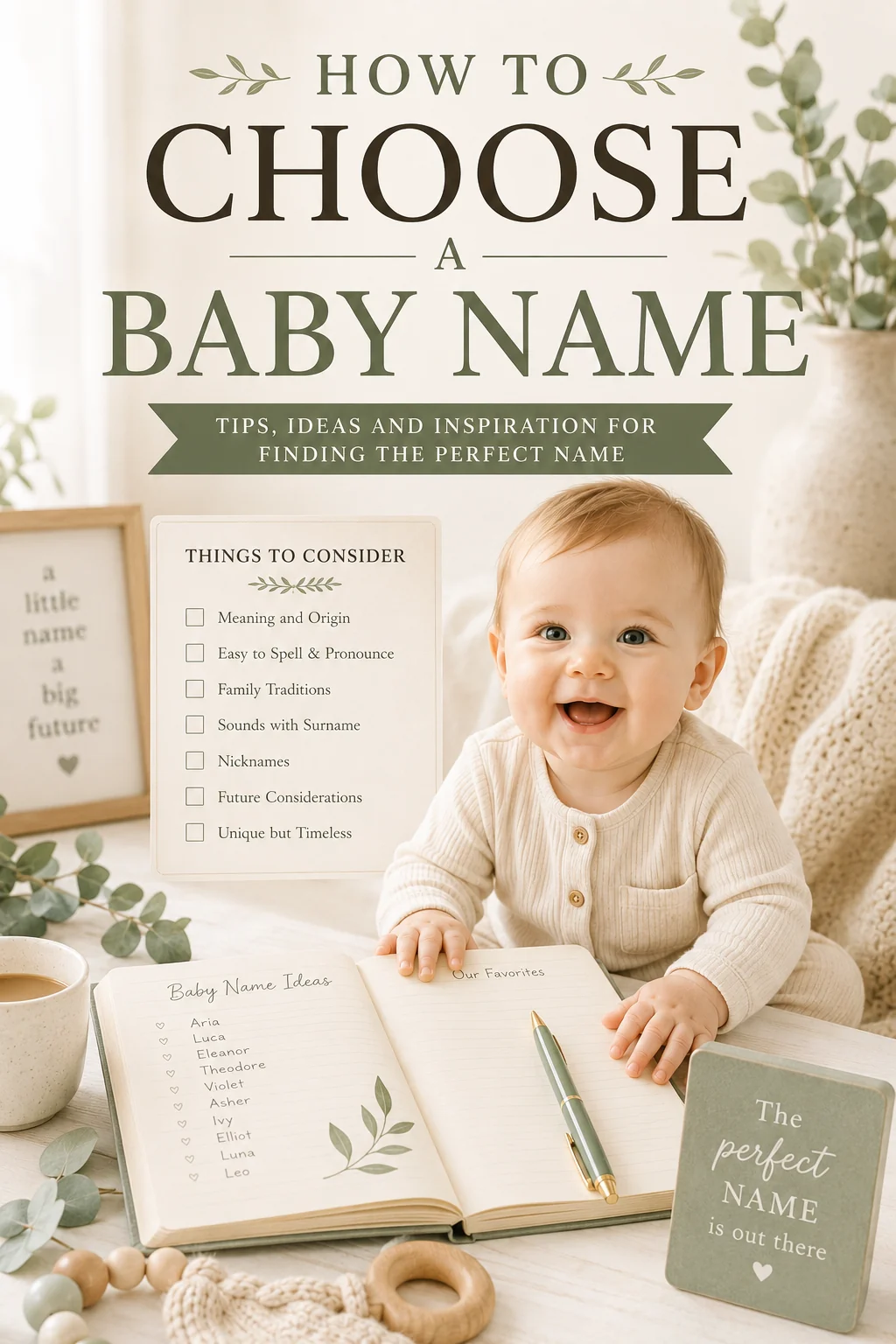
Choosing your baby's name might be the most important decision you make before they're even born — and somehow also one of the most overwhelming. Unlike almost every other parenting choice, a name is essentially permanent. It's the word that will be spoken over your child tens of thousands of times, the first thing on every form, the label the world hands them before they can choose for themselves. No pressure, right?
Here's the reassuring truth, though: there's no single "perfect" name — there are many wonderful ones, and a handful of sensible rules will steer you clear of the few real regrets. After helping countless parents through this, I've boiled it down to 10 rules that genuinely matter (and quietly ignore the ones that don't). Think of this as a calm, friendly framework — not to overthink the decision, but to feel confident about it. Let's find your child's name together.
Key Takeaways: How to Choose a Baby Name in 5 Steps
- Gather freely. Write down every name you like, from family names to ideas from the baby name builder. No judging yet.
- Run the practical checks. Say it with your last name, check the initials, test the nicknames, and look up the meaning.
- Look for red flags. Search the name online, say it to a friend, and check for teasing rhymes or awkward associations.
- Score your top five. Use the shortlist scorecard further down this page so you and your partner can compare fairly.
- Live with the finalists. Say them out loud for a week or two, and trust the one you keep coming back to.
The 10 rules below explain each check in detail, and the new sections after them cover family names, sibling sets, teasing, spelling, and unisex names.
The 10 rules that actually matter
1. Say it out loud — a lot
A name lives in the ear, not on paper. Say the full name — first and last together — out loud, many times. Call it across an imaginary playground. Whisper it like you're soothing a newborn. Announce it like a teacher taking roll. If it flows easily and feels good in your mouth every time, that's a green light. If you stumble, or it sing-songs awkwardly, listen to that.
2. Check the first-and-last-name rhythm
Names have rhythm, and the magic is usually in contrast. A short first name tends to shine with a longer surname (Leo Castellano), and a long first name with a shorter one (Evangeline Brooks). Watch for surnames and first names that blur together when the sounds collide ("Aiden Nguyen," "Ella Ashford"). Say it aloud — your ear will tell you.
3. Mind the initials (and the monogram)
Write out the initials of the full name. Do they spell anything unfortunate? (A baby named Brian Allen Davis becomes B.A.D.) It's a two-second check that saves a lifetime of teasing.
4. Picture every age
A great name has to work on a giggling baby, a teenager, a job applicant, and a grandparent. Picture the name on a kindergarten cubby and a CEO's office door. Names that are only cute (very trendy, very frilly) can feel stranded on an adult — choose one that grows up gracefully.
5. Decide how you feel about popularity
There's no right answer here — just your answer. Do you want a familiar, top-50 name your child shares with a few others, or something rarer? Check where a name ranks today, and remember even the #1 name is given to under 1% of babies now, so "popular" is far less common than it used to be.
6. Test the nicknames
People will shorten the name — you don't fully control this. If you name him Theodore, expect Theo or Teddy; Elizabeth invites Liz, Beth, or Eliza. Make sure you like the likely nicknames, because the world will use them whether you planned to or not.
7. Make sure you love the meaning
Even if your child never looks it up, you'll know what their name means — and it quietly shapes how you see them. A name meaning "strong," "beloved," or "light" carries a little wish inside it. It doesn't have to be profound, but you should like what it says.
8. Spell it the standard way (usually)
A creative spelling feels unique now, but it hands your child a lifetime of "no, it's spelled with a Y." Unless you have a strong cultural or family reason, the traditional spelling spares them endless corrections — and the name is just as special.
9. Avoid dating it too hard
The trendiest sounds of any moment age the fastest. A name that screams one specific year (think of names that instantly say "born in 2012") can feel stranded later. Names with deeper roots — even vintage revivals — tend to age more gracefully than pure fads.
10. Trust the gut-flutter
After all the tests, there's one more thing: how does it feel? The right name usually comes with a small flutter — a quiet "yes." You don't need to justify it. When a name passes the practical checks and gives you that feeling, you've found it.
When you and your partner disagree
This is the part nobody warns you about: naming with another person who has opinions. It's one of the most common (and surprisingly emotional) sticking points. A few strategies that genuinely work:
- Each make a list separately, then compare. Look for overlaps — those are gold. You'll often be surprised by where your tastes quietly agree.
- Use a veto system. Each partner gets unlimited vetoes, no justification required. Whatever survives both lists is a real contender. This respects the fact that a name only works if both of you can live with it forever.
- Separate "no" from "not yet." Sometimes a name grows on you. Park the maybes and revisit in a week.
- Trade categories. One picks the first name, the other the middle — or one chooses for a son, the other for a daughter.
- Don't announce too early. Sharing a shortlist with relatives invites opinions you didn't ask for and can sour a name unfairly. Many couples keep it private until the birth for exactly this reason.
The goal isn't to "win" — it's to find a name you'll both smile at for the rest of your lives.
How to actually narrow it down
If you've got a long list and feel paralyzed, here's a calm process:
- Gather freely first — no judgment, write down everything you're drawn to. (A generator helps here — browse by vibe or meaning and save anything that sparks.)
- Run the 10 rules — let them quietly eliminate the ones with real problems.
- Live with your top 3–5 — say them daily, imagine introducing your child, try them in your home.
- Notice which one you keep reaching for — the keeper tends to rise to the top on its own.
- Don't force a final decision before you need to — many parents meet their baby and then know. It's completely okay to arrive at the hospital with two finalists.
You truly cannot get this "wrong." There are dozens of names your child would wear beautifully and grow to love. The rules are just there to help you choose one you'll feel calm and happy about — and then to trust it.
Family Names, Honoring Relatives and Cultural Heritage
Many parents want their baby's name to carry a piece of family history. It is one of the most meaningful ways to choose, and there are more options than simply copying a grandparent's name:
- Use it as a middle name. A family name in the middle spot honors someone without the first name feeling dated. Our middle name guide has ideas for pairing them.
- Try a modern version. A grandmother named Margaret might inspire Maggie, Greta, or Daisy (a traditional nickname for Margaret). A grandfather named William might inspire Liam or Will.
- Borrow a surname. A mother's maiden name or a grandparent's last name can make a distinctive first or middle name.
- Honor the meaning, not the name. If a relative's name does not suit your baby, pick a different name with the same meaning or the same first initial.
- Reflect your heritage. A name from your family's language or culture connects your child to their roots. Check pronunciation with relatives so you get it right.
A gentle tip: if you are honoring one side of the family, think about how the other side might feel. Some couples balance it with one family name in the first spot and one in the middle.
Does It Work With Your Last Name and Your Other Kids' Names?
A name never stands alone. It sits next to your surname on every form and next to its siblings' names on every holiday card.
The last-name flow check
- Avoid rhymes. First and last names that rhyme can sound like a cartoon character.
- Watch the run-together. If the first name ends with the same sound the last name starts with, the two can blur into one word.
- Count the syllables. A mix usually sounds best, such as a two-syllable first name with a one- or three-syllable last name.
- Skip the alliteration overload. One matching letter can be charming. A whole name of matching sounds can feel like a tongue twister.
The sibling check
Siblings' names do not need to match, but they should feel like they belong to the same family. A few things to think about:
- Similar style. If your first child has a classic name, a very trendy name for the second may feel out of place.
- Different first sounds. Names that start with the same sound (like Mason and Madison) can get mixed up when you call across the house.
- No accidental pairs. Say the names together. Some pairs sound like a famous duo or a joke.
- Fair weight. If one child has a family name, consider whether the next child would like one too.
For combinations that work well together, browse our sibling names that go together.
Check for Unwanted Associations and Teasing
A name you love might mean something different to the rest of the world. These quick checks take ten minutes and can save years of trouble:
- Search the full name online. See whether it belongs to someone famous, a character, a brand, or anything you would not want linked to your child.
- Try the playground rhyme test. Kids are creative. Think about what the name rhymes with and what a classmate might turn it into.
- Check the initials and monogram. Rule 3 above covers this, but also look at first-and-last initials alone and at how a school email or username might look.
- Look up the meaning in other languages. A lovely word in one language can be an odd word in another, especially if your family speaks more than one.
- Say it to one trusted friend. Watch their first reaction. If they hesitate or laugh, ask why.
No name is completely tease-proof, and that is okay. The goal is simply to avoid an obvious, built-in joke.
Pronunciation and Spelling: The Coffee-Shop Test
Imagine your child giving their name at a coffee shop. Will the barista spell it right? Will a substitute teacher say it right on the first try? A name that is easy to say and spell saves your child thousands of small corrections.
- Write it, then ask someone to read it aloud. If they say it differently than you do, expect the world to do the same.
- Say it, then ask someone to spell it. If they spell it differently than you would, that is a lifetime of spelling it out.
- Be ready to teach it. If you love a name that is harder to say, like many beautiful names from other languages, go for it. Just plan to gently teach it, and keep the spelling as close to the original as you can.
Choosing a Unisex or Gender-Neutral Name
Unisex names like Avery, Jordan, Riley, and Rowan are a popular choice. Many parents like that they feel modern, flexible, and open-ended. A few things to weigh:
- Some names shift over time. A name used mostly for boys a generation ago may be used mostly for girls today, and the reverse can happen too.
- Pair it thoughtfully. A unisex first name with a more traditional middle name gives your child options later.
- Check the sibling fit. A gender-neutral name sits nicely next to both classic and modern sibling names.
For ideas with meaning behind them, see our list of meaningful gender-neutral names.
Your Baby Name Shortlist Scorecard
When you are down to a handful of names, a simple scorecard helps you and your partner compare them fairly. Copy this list onto paper or into a notes app. Give each name a score from 1 (not great) to 5 (love it) for every line, then add up the totals.
- Sound: Does it sound good said aloud with our last name? ___ / 5
- Initials: Do the initials and monogram look fine? ___ / 5
- Nicknames: Do we like the nicknames people will use? ___ / 5
- Meaning: Do we love what it means? ___ / 5
- Every age: Does it work for a baby, a teen, and an adult? ___ / 5
- Spelling: Will most people spell and say it right? ___ / 5
- Associations: Did the online search and rhyme test come back clean? ___ / 5
- Siblings: Does it fit with our other children's names? ___ / 5
- Partner A: How much does Partner A love it? ___ / 5
- Partner B: How much does Partner B love it? ___ / 5
The highest total is not an automatic winner. But if a name scores low on a practical check, the scorecard makes the problem easy to see and talk about. Pair it with our baby name checklist for a final once-over, and read how to pick a baby name with no regrets if you are worried about second thoughts later.
Frequently Asked Questions
How do I choose a baby name?
Start by gathering names you love freely, then run them through key checks: say the full name aloud, check the rhythm with your surname and the initials, picture it at every age, test the likely nicknames, and make sure you love the meaning. When a name passes these and gives you a gut-flutter, that's the one.
What are the most important baby-naming rules?
The ones that matter most: it should sound good said aloud with your last name, have acceptable initials, work at every age, have nicknames you like, and feel right to you. Creative spellings and overly trendy sounds are the most common regrets.
How do my partner and I agree on a name?
Make separate lists and compare for overlaps, use a no-justification-needed veto system, separate "no" from "not yet," and consider keeping your shortlist private until birth to avoid unwanted opinions. The aim is a name you'll both love forever.
Should I worry about a name being too popular?
Only if you want to — there's no wrong answer. Even today's #1 name is given to under 1% of babies, so popular names are far less common than they used to be. Check the current ranking and decide what feels right for you.
When should I decide on the name?
There's no rush — many parents arrive at the hospital with two finalists and decide once they meet their baby. Narrow to a top few, live with them, and trust that the right one will rise to the top (sometimes only when you see your little one's face).
Does the meaning of a name really matter?
It's worth caring about, even if subtly — you'll always know what it means, and it quietly colors how you see your child. It needn't be profound, but choosing a meaning you like adds a lovely layer to the name.
What are the rules of thumb for choosing a baby name?
Say the full name out loud, check the initials, make sure it works with your last name and your other children's names, test the nicknames, search it online for unwanted associations, choose a spelling people can read, and pick a meaning you love.
Should we name our baby after a family member?
It is a lovely tradition if the name also suits your baby. If the exact name feels dated, try it as a middle name, use a modern version or nickname, or choose a different name with the same meaning or first initial.
How do I know if a baby name will get teased?
Search the full name online, think about what it rhymes with, check the initials, and say it to a trusted friend to watch their first reaction. No name is completely tease-proof, but these checks catch the obvious problems.
Do siblings' names need to match?
No, but they should feel like they belong together. Aim for a similar style, avoid names that start with the same sound, and say the names side by side to make sure they do not form an awkward pair.
Is it a good idea to choose a unisex baby name?
Many parents love unisex names because they feel modern and flexible. Just keep in mind that some names shift in how they are used over the years, and pairing a unisex first name with a more traditional middle name gives your child options.
🔗 More Baby Name Guides You'll Love
Ready to find the one?
You've got the framework — now the fun part begins. Gather the names that make your heart flutter, run them through the rules, and trust the one that rises to the top.
👉 Open the free Baby Name Builder and explore over 1,000 names by vibe, origin, and meaning. Swipe, save your favorites, and build a shortlist you love. No signup, no app — just you and a world of names. 💕
Feeling closer to the one? Trust the process — start your shortlist today.