Japanese Baby Names: 50 Beautiful Picks and What They Mean
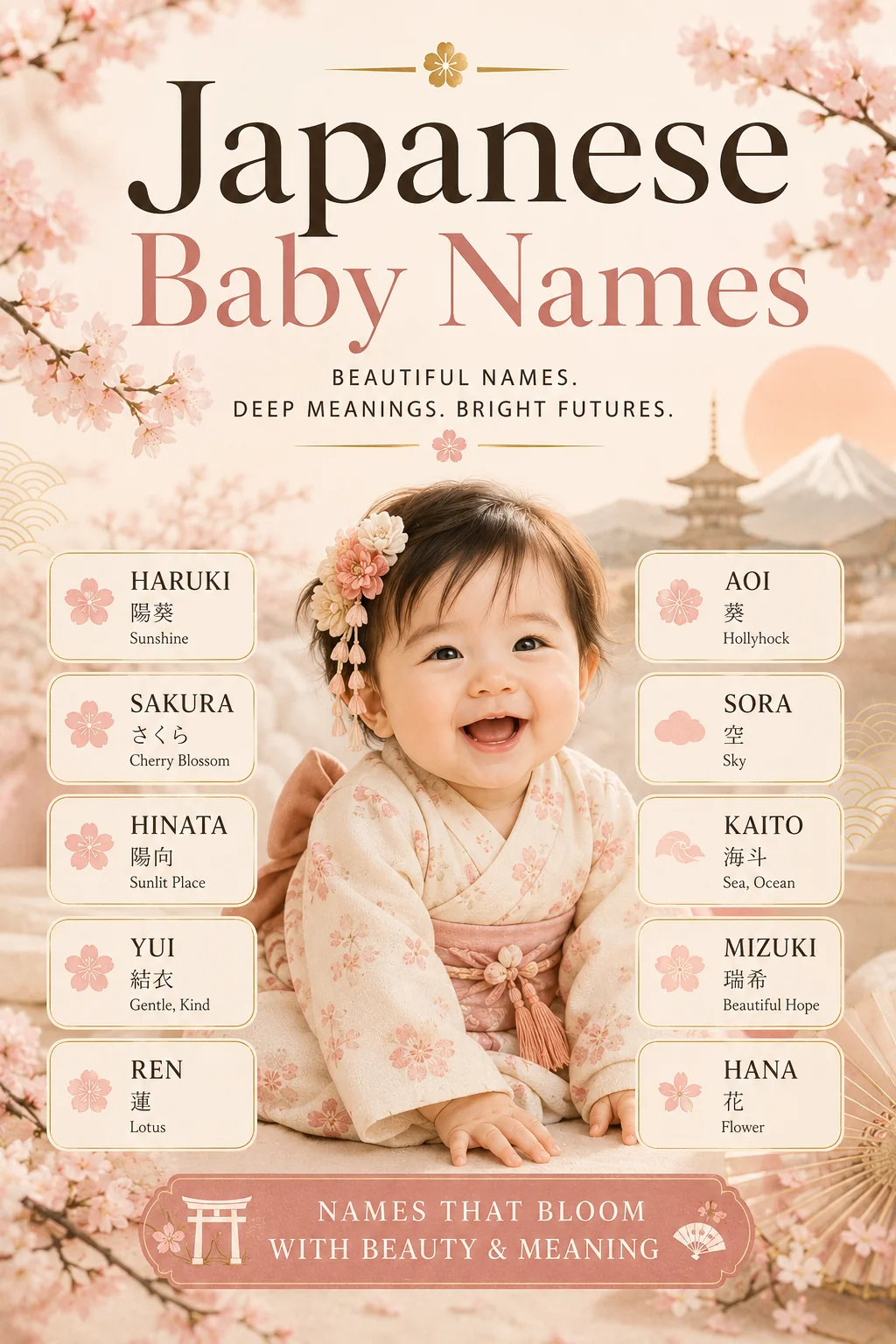
Japanese names have a quiet kind of beauty — short, clear sounds that carry surprisingly deep meanings, often drawn straight from nature: blossoms, light, the sea, the seasons. They've also become beloved well beyond Japan, partly through anime, film, and design, and partly because so many of them simply sound lovely to almost any ear. Names like Hana, Kai, and Yuki travel effortlessly across cultures.
But there's one thing about Japanese names that's worth understanding before you choose, and most lists skip right past it: in Japanese, the meaning of a name usually comes from the kanji (the written characters), not just the sound. A single spoken name like "Akira" can mean several different things depending on which characters you write it with. I'll explain how that works in plain terms, give you 50 beautiful names with their common meanings and pronunciations, and offer a few respectful notes for families honoring Japanese heritage versus those simply drawn to the sound. Let's dive in.
A quick word on kanji (it changes everything)
Here's the key idea: most Japanese names are written in kanji — characters that each carry meaning. The same sound can be written multiple ways, each giving a different meaning. Take Haruto, a hugely popular boy name: depending on the characters, it can mean "sun + soar," "spring + person," or "clear weather + flight." The sound stays the same; the meaning shifts with the writing.
What this means for you: the meanings below are the common ones associated with each name, but in Japan a family chooses the specific kanji to fine-tune the meaning they want. It's a beautiful, intentional system — the written name is almost like a tiny poem. If your family has Japanese heritage, the kanji choice is a meaningful conversation to have with relatives. If you're drawn to the sound from afar, it's lovely to at least know the meaning you're leaning toward.
👧 Japanese girl names
| Name | Say it | Common meaning |
|---|---|---|
| Hana | HAH-na | Flower |
| Sakura | sah-KOO-rah | Cherry blossom |
| Yuki | YOO-kee | Snow; happiness |
| Aoi | AH-oh-ee | Hollyhock; blue |
| Mei | MAY | Bright; sprout |
| Hina | HEE-na | Sun, light |
| Rei | RAY | Lovely; spirit |
| Emi | EH-mee | Beautiful blessing |
| Yua | YOO-ah | Binding love |
| Mio | MEE-oh | Beautiful cherry blossom; thread |
| Kaede | kah-EH-deh | Maple leaf |
| Nana | NAH-na | Seven; greens |
| Riko | REE-koh | Child of truth/jasmine |
| Akari | ah-KAH-ree | Light, brightness |
| Sora | SOH-rah | Sky |
👦 Japanese boy names
| Name | Say it | Common meaning |
|---|---|---|
| Haruto | HAH-roo-toh | Sun, soaring, spring |
| Ren | REN | Lotus; love |
| Kaito | KY-toh | Ocean, soar |
| Sota | SOH-tah | Sudden, big; soar |
| Riku | REE-koo | Land; sky |
| Yuto | YOO-toh | Gentle, superior |
| Haru | HAH-roo | Spring; sun, clear |
| Sora | SOH-rah | Sky |
| Kenji | KEN-jee | Intelligent, strong second son |
| Daiki | DY-kee | Great glory; great tree |
| Akira | ah-KEE-rah | Bright, clear |
| Hiroshi | hee-ROH-shee | Generous, prosperous |
| Takumi | tah-KOO-mee | Artisan, skillful |
| Sho | SHOH | Soar, fly |
| Itsuki | eet-SOO-kee | Tree, timber |
Beautifully unisex picks
Japanese has some wonderful names that wear well on any child — a real strength of the language:
- Sora (sky) — soft and open, lovely for anyone.
- Hikaru (light, radiance) — gentle and luminous.
- Aki (bright, clear; autumn) — short and crisp.
- Makoto (sincerity, truth) — a virtue name with real depth.
- Haru (spring; clear weather) — fresh and warm.
- Rei (spirit; lovely) — minimal and elegant.
These are a great starting point if you want a Japanese name that doesn't lean strongly masculine or feminine.
Nature, seasons, and the meaning behind the sounds
If you look back over the lists, you'll notice how much of Japanese naming grows straight out of the natural world — and that's part of the appeal:
- Blossoms and plants: Sakura (cherry blossom), Hana (flower), Kaede (maple), Aoi (hollyhock).
- Sky and sea: Sora (sky), Kaito (ocean), Riku (land/sky), Sho (to fly).
- Light and weather: Akari (light), Hikaru (radiance), Yuki (snow), Haru (spring).
Choosing a Japanese name often means choosing a tiny piece of the natural world to carry — a blossom, a sky, a first snow.
A name written in kanji is almost a small wish in characters — chosen sound and chosen meaning, layered together. Even if you only ever use the romanized spelling, knowing the meaning you're reaching for makes the name feel intentional.
Modern favorites vs. timeless classics
Just like anywhere, Japanese naming has its trends. It helps to know roughly where a name sits on that spectrum:
- Currently fashionable in Japan: short, soft names dominate the modern charts — Ren, Hana, Sora, Riku, Mei. These feel fresh and contemporary, the Japanese equivalent of today's vintage-revival vibe.
- Timeless and traditional: names like Hiroshi, Takeshi, Kenji, and Yoko have a more classic, established feel — think of them as the Japanese equivalents of William or Margaret.
- Internationally beloved: Kai, Hana, Yuki, and Akira have become widely recognized worldwide, so they feel familiar even outside Japan.
There's no wrong place on that spectrum — it just helps to know whether you're choosing something that reads as modern, classic, or globally familiar.
A respectful note on heritage
A quick, warm word, because it matters. If your family has Japanese heritage, these names are a beautiful way to honor it — and the kanji choice is a wonderful thing to discuss with elders, who may have a character or family meaning they'd love to pass on. If you simply find these names beautiful from the outside (totally understandable — they are), the kindest approach is to choose a name you can pronounce correctly and whose meaning you genuinely love, and to wear it with respect rather than as decoration. Names like Hana, Kai, Mei, and Sora travel especially gracefully and are widely loved across cultures.
Frequently Asked Questions
What are beautiful Japanese baby names?
Beautiful Japanese names include Hana (flower), Sakura (cherry blossom), Yuki (snow), and Akari (light) for girls, and Haruto (sun, soaring), Ren (lotus), Kaito (ocean), and Akira (bright) for boys.
How does kanji affect a Japanese name's meaning?
In Japanese, names are usually written in kanji characters that carry meaning, so the same spoken name can mean different things depending on which characters are chosen. Families pick the kanji to fine-tune the meaning they want.
What are good unisex Japanese names?
Sora (sky), Hikaru (light), Aki (bright), Makoto (truth), Haru (spring), and Rei (spirit) all work beautifully for any child.
Are Japanese names easy to pronounce in English?
Many are — Hana, Kai, Mei, Ren, and Sora are short and phonetic. Each name in this guide includes a simple pronunciation guide to help.
What Japanese names mean nature things like flowers or sky?
Sakura (cherry blossom), Hana (flower), Kaede (maple), Sora (sky), Kaito (ocean), and Yuki (snow) all draw directly from the natural world.
Is it okay to use a Japanese name without Japanese heritage?
Many Japanese names are loved worldwide. The respectful approach is to choose one you can pronounce correctly, learn the meaning you're reaching for, and wear it with genuine respect — names like Hana, Mei, and Sora travel especially well.
🔗 More Baby Name Guides You'll Love
Ready to find your Japanese name?
Whether you're honoring Japanese heritage or simply love the gentle beauty of these names, there's a blossom, a sky, or a first snow here waiting to become your child's.
👉 Open the free Baby Name Builder and explore over 1,000 names by vibe, origin, and meaning. Swipe, save the ones that feel serene and right, and build a shortlist you love. No signup, no app — just you and a world of names. 💕
Which name carried a meaning you loved? Trust that pull — start your shortlist today.