Spanish Baby Names: 50 Beautiful Picks and Their Meanings
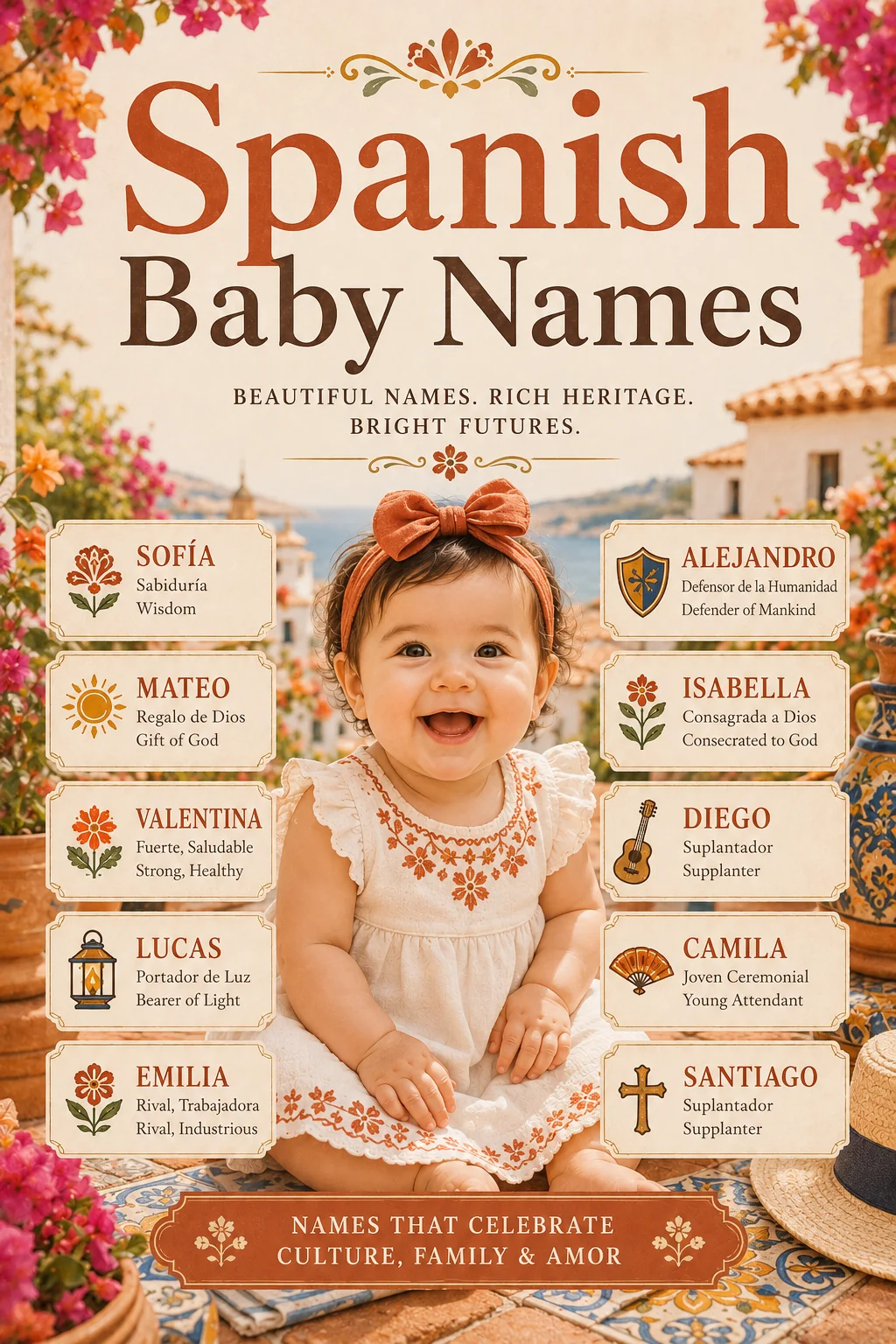
Spanish names have a warmth you can almost feel — they're sunlit, musical, and rich with rolling vowels and meaning. They're also, quietly, taking over the charts: Mateo, Sofia, Luna, and Santiago now rank near the very top in the US, not just in Spanish-speaking households but across the board. There's something about the warmth and rhythm of these names that resonates with everyone, and the fact that so many cross effortlessly between English and Spanish makes them an easy, joyful choice for a huge range of families.
What I want to do here is more than hand you a list. Spanish naming has its own rich texture — beautiful religious traditions, an art form's worth of nicknames, and names that flex gorgeously across cultures. So below you'll find 50 of the loveliest Spanish names with their meanings, a guide to which ones travel best into an English-speaking world, and a peek at the nickname culture that makes these names so affectionate. Whether you're honoring Hispanic heritage or simply drawn to the sunshine in these names, vamos — let's find yours.
👧 Spanish girl names
| Name | Meaning |
|---|---|
| Sofia | Wisdom |
| Isabella | Devoted to God |
| Valentina | Strong, healthy |
| Camila | Young ceremonial attendant |
| Lucia | Light |
| Elena | Bright, shining light |
| Carmen | Garden; song |
| Paloma | Dove |
| Mariana | Combination of Maria + Ana |
| Catalina | Pure |
| Alejandra | Defender of the people |
| Renata | Reborn |
| Ximena | Listener; hearkening |
| Dulce | Sweet |
| Aurora | Dawn |
👦 Spanish boy names
| Name | Meaning |
|---|---|
| Mateo | Gift of God |
| Santiago | Saint James |
| Diego | Supplanter (form of James) |
| Alejandro | Defender of the people |
| Sebastián | Venerable, revered |
| Lucas | Bringer of light |
| Javier | New house; bright |
| Emiliano | Rival; eager |
| Tomás | Twin |
| Rafael | God has healed |
| Nicolás | Victory of the people |
| Andrés | Strong, manly |
| Leonardo | Brave as a lion |
| Maximiliano | Greatest |
| Ignacio | Fiery |
The names that cross borders beautifully
One of the great gifts of Spanish names is how many wear two hats — fully at home in Spanish and in English, often with just a tiny shift in pronunciation. If you want a name that honors heritage but never trips up a teacher in an English-speaking classroom, these are gold:
- Sofia / Sophia — identical in spirit, beloved in both languages.
- Lucas, Mateo, Diego — short, punchy, and instantly recognizable everywhere.
- Elena, Lucia, Aurora — soft and lyrical, no translation needed.
- Gabriel, Daniel, Adrian — spelled the same, just said with a little more music in Spanish.
- Eva, Lia, Mia — tiny and universal.
These bicultural names are especially perfect for families living between two languages — the name simply belongs in both worlds, no compromise required.
The art of the Spanish nickname
Here's something that makes Spanish names so warm: the nicknames (apodos) are a genuine art form, and they're often wildly different from the full name in a way that delights newcomers. A few classics:
- Francisco → Paco or Pancho
- José → Pepe
- Guadalupe → Lupita
- Rosario → Charo
- Dolores → Lola
- Enrique → Quique
- Concepción → Concha
The pattern is less about shortening and more about affection — a nickname is a little hug built into the name. So even a long, formal name like Maximiliano comes pre-loaded with the warm, everyday Max or Maxi. If a name on your list feels too grand, there's almost always a cuddly apodo waiting inside it.
Spanish names tend to carry sunshine and faith in equal measure — many honor saints, the Virgin Mary, or virtues like Dulce (sweet) and Esperanza (hope). You're not just choosing a pretty sound; you're often choosing a small blessing.
Religious and traditional roots
Many traditional Spanish names spring from Catholic devotion, and it's lovely context even if it's not your own faith. Names like Guadalupe, Dolores, Mercedes, Pilar, and Rosario all honor titles or aspects of the Virgin Mary, while Santiago, Sebastián, and Rafael carry saints and archangels. This is why Spanish names so often feel like they have weight — they've been carried through generations of celebrations, baptisms, and saint's days. Even the breezy modern favorites usually have this deeper root if you go looking for it.
Spain vs. Latin America: a subtle difference
"Spanish names" actually spans two-dozen countries, and while there's huge overlap, the flavor shifts a little by region — useful to know if you're honoring a specific heritage.
In Spain, you'll find names tied to its regions and languages: Catalan (Jordi, Núria), Basque (Iker, Ane), and Galician (Brais, Antía) names sit alongside the national favorites. Spanish charts also skew a touch more traditional and saint-centered.
In Latin America, naming is often more inventive and varied, blending classic Spanish names with Indigenous roots (Xiomara, Citlali, Mateo's neighbor Cuauhtémoc) and a love of creative combinations. Mexican, Colombian, Argentine, and Caribbean naming each have their own subtle accent.
The takeaway: if a particular country is part of your family's story, it's worth looking at that region's favorites specifically — a name can carry not just "Spanish" heritage but a precise sense of home.
The two-surname tradition
Here's a lovely structural difference worth understanding. In most Spanish-speaking cultures, a child traditionally carries two surnames — the father's first surname and the mother's first surname (e.g., María García López). It's a beautiful way of honoring both family lines at once, and it means a person's full name keeps both grandfathers' names alive. If your family follows or wants to honor this custom, it's worth factoring in early: a long, flowing first name pairs differently with a double surname than a short, punchy one. Many families choose a crisp first name (Sofía, Diego) precisely so the full name doesn't become a mouthful.
Pairings and double names
Spanish naming loves a double first name — María José, José Luis, Ana Sofía, Juan Pablo — which gives a name extra music and lets families honor two saints or relatives at once. If you love that tradition, pairings like Sofía Elena, Mateo Alejandro, or Luna Valentina flow beautifully. For a single name plus an English-friendly middle, try Diego James, Camila Rose, or Lucas Andrés.
Frequently Asked Questions
What are popular Spanish baby names?
Popular Spanish names include Sofia, Valentina, Camila, and Lucia for girls, and Mateo, Santiago, Diego, and Sebastián for boys — many of which now rank near the top of US charts too.
What Spanish names work well in English?
Sofia, Lucas, Mateo, Diego, Elena, Lucia, Gabriel, and Eva all cross effortlessly between Spanish and English, usually with only a small shift in pronunciation.
What are common Spanish nicknames?
Spanish nicknames (apodos) are often affectionately different from the full name: Francisco becomes Paco or Pancho, José becomes Pepe, Guadalupe becomes Lupita, and Enrique becomes Quique.
What Spanish girl name means light?
Lucia means "light" in Spanish, while Elena and Aurora mean "bright shining light" and "dawn" — all luminous, classic choices.
Why are Spanish baby names so popular now?
Names like Mateo, Sofia, and Luna have surged across all communities thanks to their warmth, musical sound, and the ease with which they cross between English and Spanish.
What is a strong Spanish boy name?
Alejandro (defender of the people), Leonardo (brave as a lion), Maximiliano (greatest), and Andrés (strong, manly) are all strong, characterful Spanish boy names.
🔗 More Baby Name Guides You'll Love
Ready to find your Spanish name?
Whether you're honoring Hispanic heritage or simply drawn to the warmth and music of these names, there's a sunlit, meaningful pick here waiting to become your child's.
👉 Open the free Baby Name Builder and explore over 1,000 names by vibe, origin, and meaning. Swipe, save the ones that feel like sunshine, and build a shortlist you love. No signup, no app — just you and a world of names. 💕
Which name carried the warmth you were after? Trust it — start your shortlist today.