15 Things to Do Before Your Baby Arrives
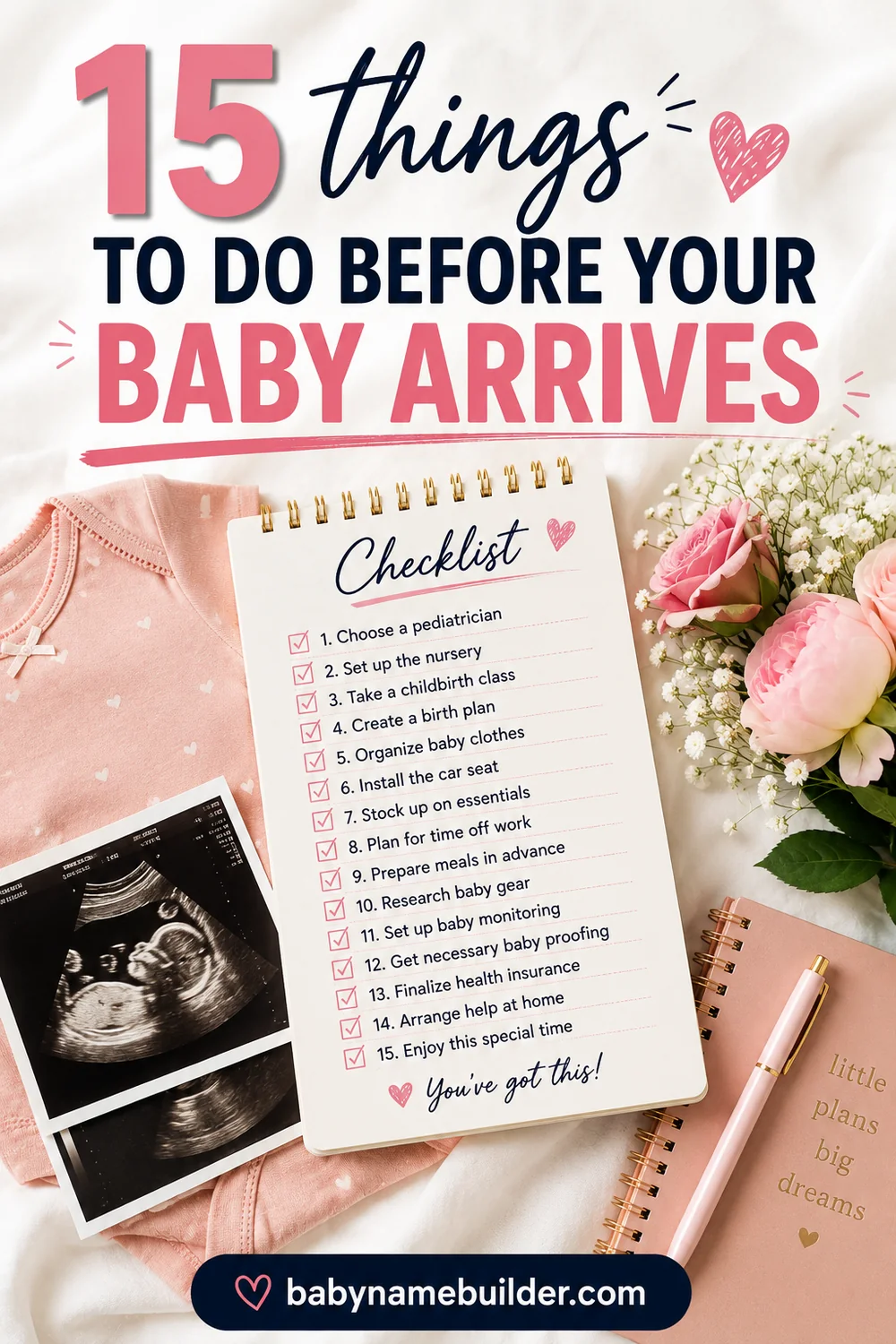
The Pre-Baby To-Do List That Actually Helps
The weeks before your due date are equal parts exciting and exhausting. There's so much to prepare — and it can be hard to know where to start or what actually matters versus what's just noise from the parenting industry. This list cuts through it all.
These 15 tasks are the ones that genuinely make a difference. Some are practical (car seat, hospital bag), some are logistical (childcare research, parental leave planning), and some are the meaningful things that often get skipped in the rush (like actually choosing your baby's name in a thoughtful way). Do them in whatever order works for you, but try to have most of them done by week 36 — because babies don't always wait for their due date.
Whether you're a first-time parent or adding to your family, this checklist will help you feel genuinely ready.
1. Set Up the Nursery ⭐
Why it matters: Your baby will need a safe, functional sleep space from day one. Set up the crib or bassinet with a firm, flat mattress and a fitted sheet — that's it. No bumpers, no pillows, no blankets in the sleep area (safe sleep guidelines are clear on this). Get the changing table organized with diapers, wipes, and a change of clothes within arm's reach. You don't need a Pinterest-perfect nursery. You need a safe, practical one.
2. Research Pediatricians
Why it matters: You'll need a pediatrician for your baby's first checkup within a few days of birth. Interview a few providers before your due date — ask about their after-hours line, vaccination philosophy, and office wait times. Many practices require you to be registered as a patient before the baby is born. Don't leave this until after delivery.
3. Choose Your Baby's Name
Why it matters: Naming your baby is one of the most meaningful things you'll do in these months — and it deserves more than a last-minute scramble. Start exploring early, give yourself time to sit with options, and don't let the pressure of a deadline rush you into a name you're not fully sure about. Baby Name Builder lets you search thousands of names by meaning, origin, and style for free. Filter by what matters to you — whether that's cultural heritage, a specific meaning, a sound you love, or a style (vintage, modern, nature-inspired, gender-neutral). Having a name ready — and ideally a backup — before you go into labor makes those first moments even sweeter.
4. Pack Your Hospital Bag
Why it matters: Pack by week 36, because early labor happens. For mom: comfortable clothes, toiletries, phone charger, snacks, a pillow from home, and your birth plan. For baby: one coming-home outfit, a car seat-compatible blanket, and a few newborn diapers. For your partner: a change of clothes, snacks, entertainment for long stretches, and a list of who to call. Keep it by the door.
5. Take a Childbirth Class
Why it matters: Even if you've done this before, a refresher is worth it. Childbirth classes cover labor stages, pain management options, what to expect in the hospital, and early newborn care. Many hospitals offer them free or low-cost. Online options like Lamaze International are available if in-person doesn't work for your schedule.
6. Install the Car Seat
Why it matters: The hospital won't let you leave without a properly installed infant car seat. Install it before your due date and get it inspected by a certified child passenger safety technician — many fire stations offer this service free. Rear-facing infant seats go in the back seat. Read the manual for your specific model.
7. Meal Prep and Freeze
Why it matters: You will not want to cook in the first two weeks after birth. Fill your freezer now. Soups, casseroles, pasta sauces, and breakfast burritos all freeze well. Aim for 10–15 meals. When well-meaning friends and family ask what they can do to help, tell them: bring food.
8. Set Up Your Baby Registry
Why it matters: A registry helps your support network buy things you actually need instead of things that look cute. Focus on: car seat, stroller, crib or bassinet, baby monitor, feeding supplies, diapering essentials, and a white noise machine. Skip overly specialized gadgets — most babies don't need them and many go unused.
9. Research Childcare and Daycare
Why it matters: Quality childcare has waitlists that stretch 6–18 months in most cities. If you're planning to return to work, start researching and touring options in your second trimester. You can always decline a spot you don't end up needing — but you can't manufacture one at the last minute.
10. Write a Birth Plan
Why it matters: A birth plan isn't a contract — it's a communication tool. It tells your care team your preferences for pain management, delivery positions, who you want in the room, and immediate postpartum wishes (skin-to-skin, delayed cord clamping, etc.). Keep it to one page and discuss it with your provider before labor.
11. Prepare Siblings and Pets
Why it matters: Older children need time to adjust to the idea of a new sibling — read books about it, let them help set up the nursery, and talk openly about what's coming. Pets, especially dogs, benefit from gradual introductions to baby sounds and smells. Bring home a hospital blanket with the baby's scent before the baby arrives home.
12. Baby-Proof the House
Why it matters: You won't need this immediately — newborns don't move — but the first year goes fast. Install cabinet locks, outlet covers, and baby gates now while you have the time and energy. Secure heavy furniture to walls. Check for choking hazards at floor level.
13. Get Life Insurance and Update Your Will
Why it matters: This is the task most new parents postpone indefinitely. Don't. A simple term life insurance policy and a basic will with named guardians for your child is something every parent needs, and it's much easier to arrange now than in the fog of early parenthood. Many online services make basic wills fast and affordable.
14. Set Up the Baby Monitor
Why it matters: Whether you choose a simple audio monitor or a video/breathing monitor, get it installed and tested before the baby comes home. The last thing you want is to be reading setup instructions at 2am in week one. Know how it works before you need it.
15. Plan Your Parental Leave
Why it matters: Understand exactly what leave you're entitled to, how to apply for it, and how long you'll be off. Coordinate with your partner if they're also taking leave. Set up an out-of-office response, hand off key projects at work, and decide how you'll stay (or not stay) connected during leave. The more clearly you plan this, the easier the transition.
Frequently Asked Questions
When should I start the pre-baby to-do list?
Ideally, start in the second trimester (weeks 13–26). Give yourself the most important tasks — childcare research, car seat installation, name research — plenty of runway. Hospital bag and freezer meals can wait until the third trimester.
What's the most important thing to do before baby arrives?
Safe sleep setup, car seat installation, and pediatrician selection are the non-negotiables. Everything else is important but more flexible.
Do I really need to choose the baby's name before the birth?
You don't legally have to — most hospitals give you several days. But having a name ready removes one big decision from an already overwhelming moment. We recommend having your top choice and a backup ready before you go into labor.
How much baby stuff do I actually need?
Less than the industry wants you to think. Newborns need a safe sleep space, a way to eat, something to wear, diapers, and a way to get somewhere safely. The rest is nice-to-have.
Is it too early to baby-proof at 30 weeks?
Not at all — it's actually ideal. Babies become mobile faster than you expect, and doing it before you're exhausted and chasing a newly mobile infant is much easier.
🔗 More Baby Name Resources
Start With the Name
You've got the checklist — now tackle the one task that's also the most meaningful.
👉 Open the Baby Name Builder Free — explore by meaning, origin, style, and more. 👶